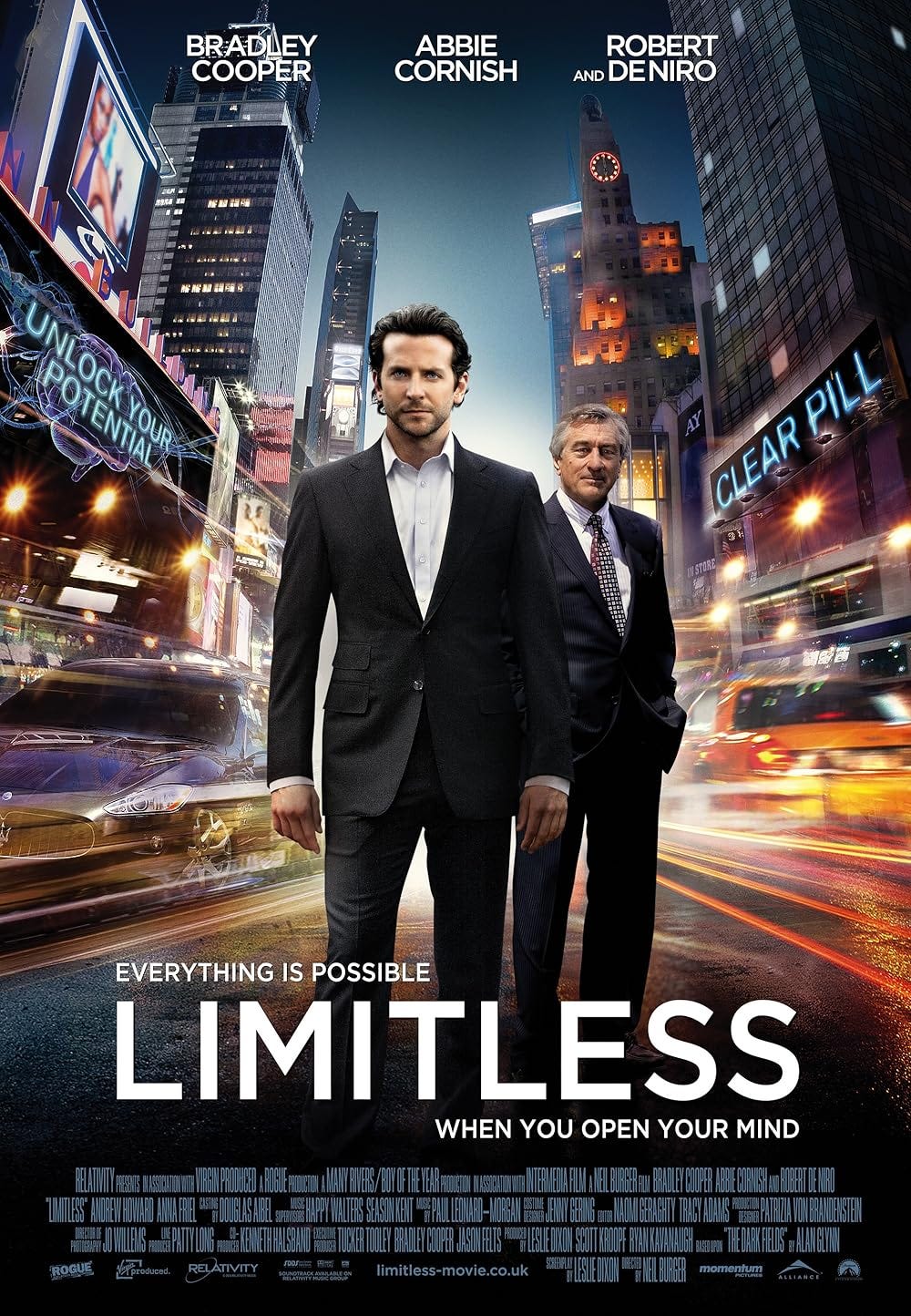
Limitless, a great film even after 14 years, is perhaps the best illustration of how I felt when I started experimenting with AI.
Bradley Cooper plays Eddie Morra, a struggling writer who gets a mysterious pill (NZT-48) that dramatically increases his mental capacity.
Suddenly, Eddie has a “I was blind, but now I see” high: he finishes a novel in days, learns new languages, makes sense of endless market data, and generally becomes an unstoppable intellectual powerhouse.
Unfortunately, like most things that come (too) easily, there's a price to pay.
Blackouts, memory loss, paranoia, the works. Eddie becomes a good-looking addict. NZT-48 doesn’t just amplify his intelligence and curiosity; it also fuels greed and abuse of power.
I won't reveal what happens next, but it's still a great movie.
AI is not NZT-48, but it’s close
The pills aren’t a perfect metaphor for what's happening with AI, especially since NZT-48 isn't widely available (yes, I checked).
Still, there are interesting parallels and critical differences.
Let's start with the similarities:
Both the NZT-48 pill and AI can dramatically amplify your smartness and productivity. Or as Eddie says: “How many of us ever know what it is to become the perfect version of ourselves?”.
Both can leave you hooked—and bring up the not-so-perfect version of ourselves, biases and all.
If your access is cut off, you have a problem.
On the other hand, some differences make AI unique:
Becoming 'limitless' with AI takes serious work, because everyone else has access to the same superpower. The baseline is rising for everyone.
Unlike Eddie, who only needed a steady supply of NZT-48, working with AI requires more than technical skills. You must feed your mind, build resilience, and stay sharp to avoid becoming a junky.
AI isn’t a finished product. It’s under construction and controlled by commercial players who don’t fully understand the outcome. This is co-intelligence in progress, and navigating it requires human judgment and ethics.
Without an operating system for thinking with AI—asking it, checking it, refining it, challenging it—you’re just producing faster, not better.
And that’s where Futurebraining comes in.
Limitless if you do the work
We made a starter guide for people ready to explore AI, with a chance to do it right from the start, or at least with some warnings in mind.
In a way, you’re lucky. You’re coming in later, but better prepared. It’s much harder to detox and rehab after the damage is done.
Imagine the trouble we would have avoided for our kids (and ourselves) if we’d known what mobile phone abuse does to your mind.
Here’s what’s inside:
What Futurebraining is. The five capabilities that help you think better with AI.
How AI Fluency grows over time—and why speed isn’t the end goal.
What makes AI valuable or risky? A tool that reflects what you bring to it.
How to choose the right tool and stay focused. One sharp model beats twenty scattered ones.
Your first prompt, done well. Practical, not magical.
Prompt formulas that actually help. For writing, decisions, and reflection.
What comes after level one? From productivity to co-intelligence.
Helping others learn. Leading without forcing. Just doing it better.
Futurebraining Ethics. What matters when we think with machines?
Is this guide for you?
Before you dive in, take a moment to check where you stand:
I have heard of tools like ChatGPT, but I'm still unsure what they do.
Am I curious about AI, but don’t know where to start?
I would love to save time on emails, writing, or planning.
Do I want to understand where this is all going, and how it might affect my work or learning?
I wish I felt more confident when AI comes up in meetings or the news.
Am I open to challenging my habits and ways of thinking?
If a few of those made you nod, this guide is for you.
It’s not a perfect map, but it gives you direction. Most of us find our way pretty quickly once we start. The key is just starting with your eyes open. (Not wide shut. But that’s another movie.)
We’re working on the next set of guides—deeper dives into real use, strategic thinking, and the human skills AI can’t touch—for individuals, teams, and leaders navigating this shift together.
But for now, it's one guide, one step, and the mind is open.
Please subscribe and download the Starter’s Guide on our Substack Tool Hub.
You’ll get the latest news, tools, and updates as we release them automatically. No forms or paywalls.
It also helps us build a community of people who think better with AI.
DM me on Substack or LinkedIn for a download link and a more personal touch.