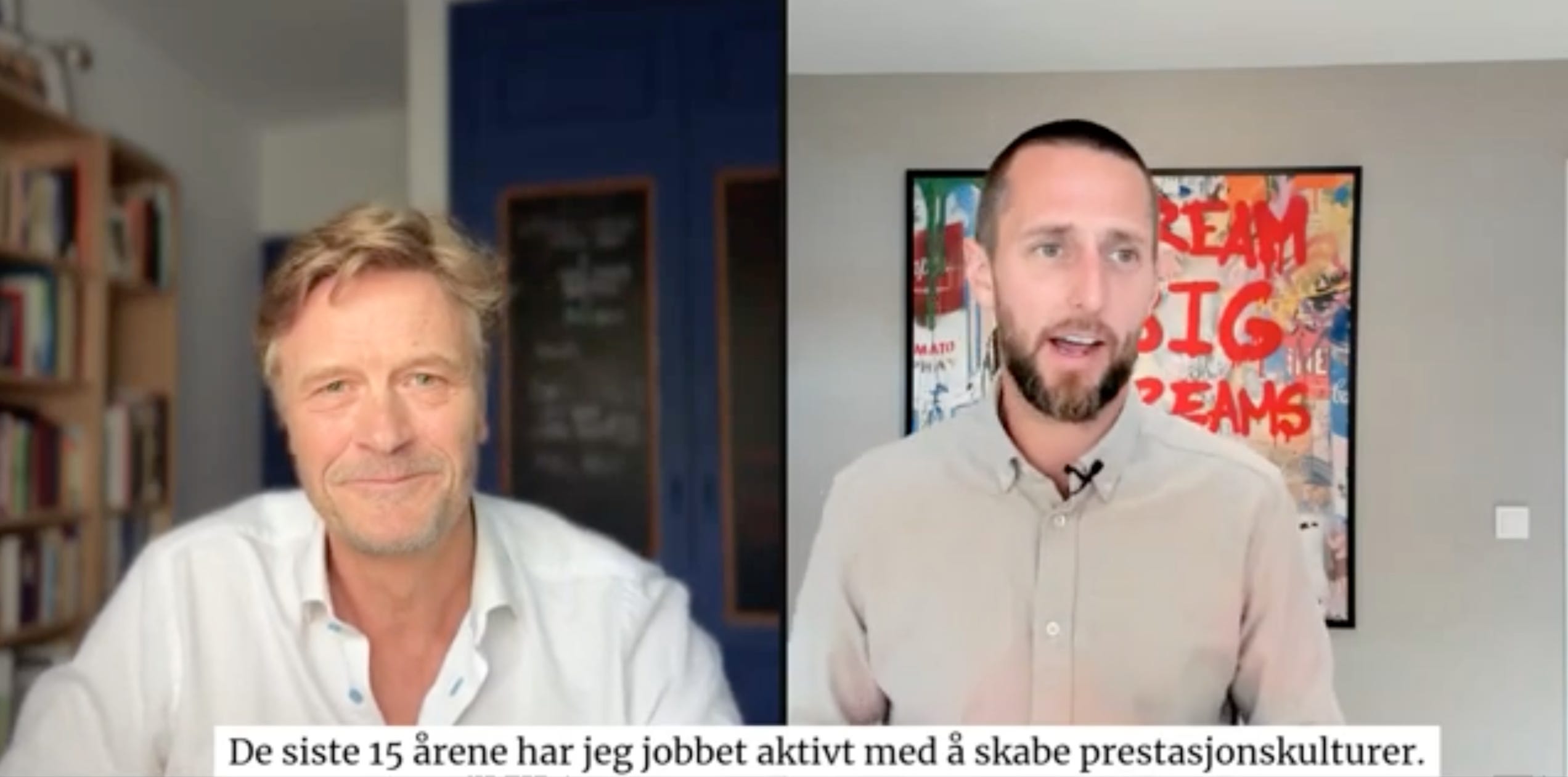
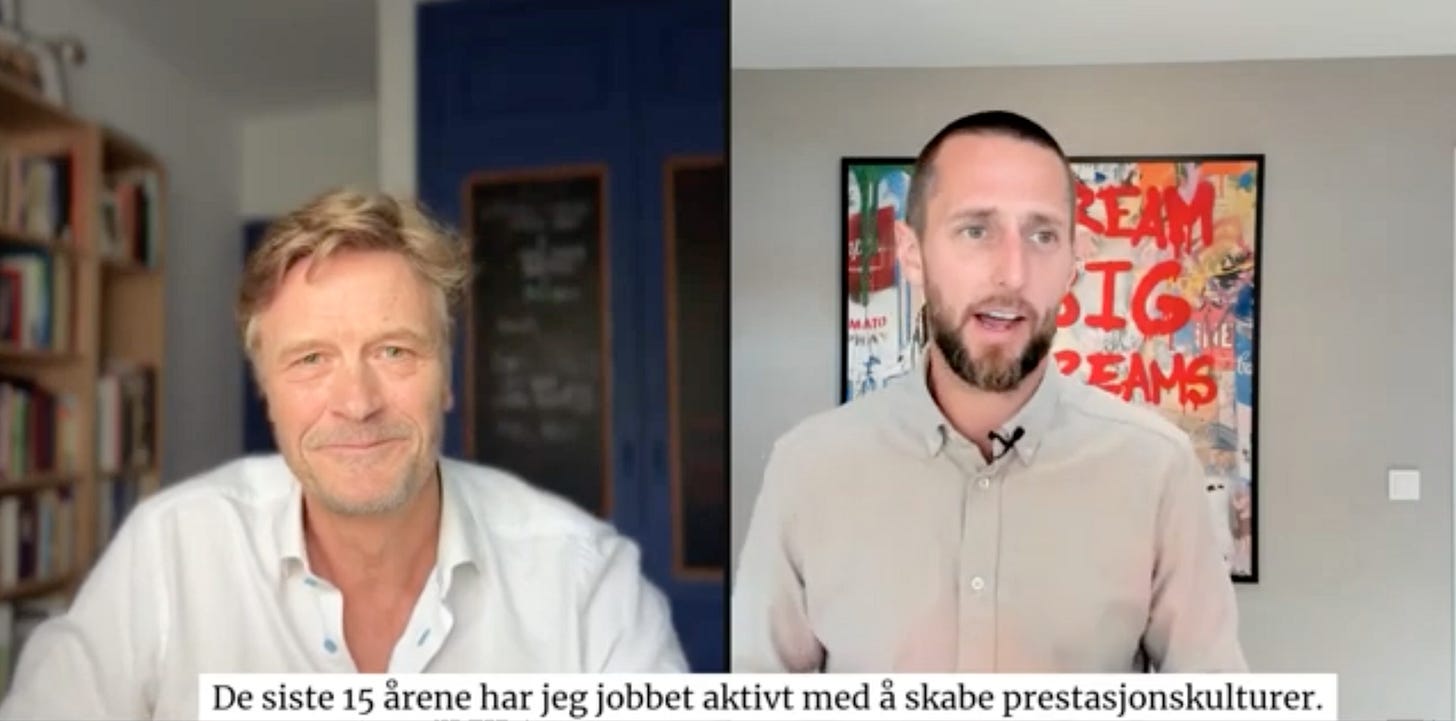
Last week, I co-hosted a live webinar with Futurebraining co-founder Martin Methlie in a language I had never used professionally.
It was part of our launch in Norway, where we started with a bet: people want AI support that feels human, not robotic. We had already shared an AI Starter Guide in Norwegian on LinkedIn, and over 4,000 people requested it. When we followed up with a webinar, hundreds joined live. This was a signal that people were seeking something more meaningful than AI upskilling and automation.
The challenge was personal. I am Dutch, partly grew up in Norway, and live in Madrid. I usually work in English and occasionally in German. Norwegian? Not since I was sixteen, packing toothbrushes at the Jordan factory in Oslo. That job required only two things: keep the machine running and talk football in the break room. So when Martin casually (and rhetorically) asked if we could do the webinar in Norwegian, I froze.
Without AI, I might have said no. Most Scandinavians speak excellent English, and no one would have blamed me for doing so (“English sounds interesting, right?”, I would have rationalised). The decision wasn’t about pressure or obligation; it was about possibility. And that’s perhaps the most significant gift AI is handing to me daily: the confidence to take on an entirely new level of problems and opportunities.
From Automation to Co-Intelligence
I didn’t use AI to bypass or bluff through the challenge, although it crossed my mind. I found a way to structure, support, and intensify the learning: a steady build-up of small challenges that kept pushing me out of my comfort zone. Each one asked for a bit more focus, a bit more effort, and a bit more brainpower.
First, I uploaded our English slides and notes and asked for a translation. That was basic productivity. But I knew that stopping there would have left me with a robotic script and zero cultural resonance. It would have sounded like a corporate pitch brochure, not a human voice.
So, I pressed further and instructed the AI to only speak to me in Norwegian, regardless of the input language. This wasn’t about translation; it became total immersion. Tone and rhythm began to click. I researched local newspapers, rewrote anecdotes, and tested jokes. That’s when Norwegian started to evolve from dictionary-correct to culturally alive.
Then came the real friction: internalizing the content. Not just my lines but Martin’s, too. That meant flashcards, quizzes, loud rehearsals, and long walks around Madrid muttering Norwegian phrases into my phone for feedback. I created AI-generated mini-podcasts to listen to while walking the dog. I rehearsed until the material stuck—not just memorized but embodied. At one point, I realized I could deliver a segment in my sleep.
To consolidate all this work and be ready for future Nordic challenges, I developed a custom GPT (Astrid) to act as my Norwegian language coach. I trained her on my context, tone, and my goals. She flagged when I slipped into academic babbling (which happens), and kept me accountable for sounding like someone who belonged in the room. Astrid didn’t compose for me, but practised with me.
That’s what I call co‑intelligence: not a replacement for your brain, but an amplifier of what’s already there, where the sum becomes greater than the parts.
The Real Results: Learning That Sticks
There were simpler ways to do this. We could have employed AI-generated avatars. I could have presented in English. I could have read a translated script verbatim. Any of those options would have carried me through the experience. However, we would have missed the chance to connect on an emotional level, something only humans can authentically do. I would have stayed stuck in my comfort zone and missed the opportunity to show I cared, simply by trying, even if it didn’t sound perfect.
Instead, we earned something real. The webinar received an overall satisfaction rating of 8.4. Yes, only a number, but the more critical feedback came in the form of messages. People said it landed and felt human. The next sessions are already scheduled through the fall.
Beyond the metrics, I understood what learning and speaking languages do to your brain. It doesn’t just carry thoughts, it shapes them. Compelling research suggests that lifelong bilingualism can postpone the onset of dementia by approximately four years (Bialystok et al., 2007). Switching and playing (or struggling) with languages builds a kind of cognitive reserve. But that only happens if you stay active. If you let AI do the work for you, those mental pathways atrophy.
The solution isn’t to avoid AI, it’s to move from automation to co-intelligence. It isn’t easy, but it can be transformative. The webinar was the immediate result. Upgrading a dormant language was the long-term win.
That’s what Futurebraining is about. Not theory. Not hype. And not shortcuts. It’s about choosing friction when it matters and relaxing when it matters too.
For this reason, we’re taking a break and will return in August to rest and prepare for the upcoming webinars in Norwegian, Dutch, and English.
If you're interested, please register here.
Have a great summer!